Tea Towels, Tinsel and the Sheep Who Went Off-Script
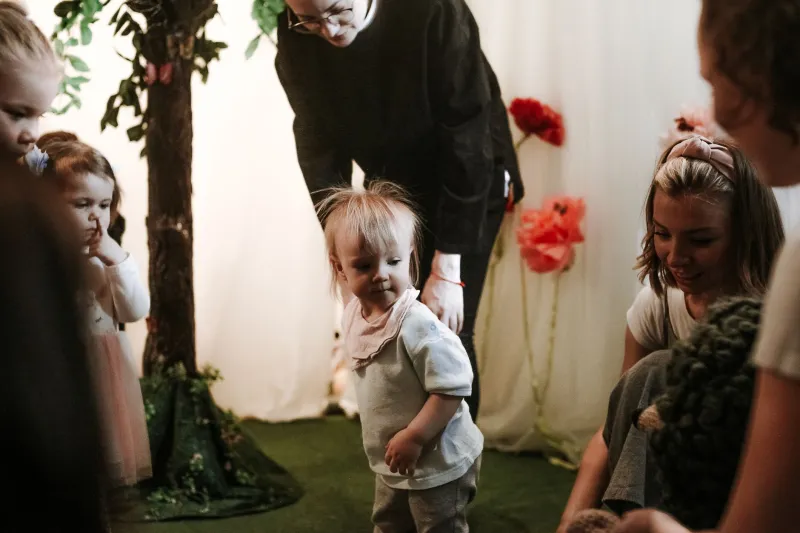
At some point this December, in a hall that smells faintly of orange squash and floor polish, a small sheep will forget his line. A shepherd will lose his crook. A star will wave at somebody in the third row. And if you are sitting on a plastic chair with your coat on your lap, you may feel a flicker of something: pride, nerves, perhaps the urge to whisper the missing words from your seat.
Please don't. The nursery nativity is not a test, and your child is not failing it. In fact, they are doing something much more useful than delivering a polished performance. They are learning what it feels like to be part of a group, to have a turn, to wait, to join in and to be cheered on simply for showing up.
It's Not a Show — It's a Shared Little World
For children under five, the nativity is not really about the story. It is about the experience of being in the story together. That means standing near a friend, holding a prop, following a song, watching a grown-up's face for a cue and discovering that the audience is full of people who are pleased to see you.
Those are big skills dressed up in a tea towel. Turn-taking, listening, waiting, regulating excitement, coping when the headdress slips over your eyes — this is early years learning in its most public and joyful form. A child who remembers to sing the wrong verse but sings it with gusto is still joining in. A child who stands at the back and watches is still part of the group. A child who waves at their nan is not disrupting the show; they are making a connection, which is precisely what nursery is for.
What Practitioners Actually Do (Hint: It's Not Drilling Lines)
At Dryden Street, we build the nativity gently. There are no auditions and no pressure to be word-perfect. Practitioners choose roles and songs that suit the children in front of them, then repeat them in short bursts during play so that familiarity grows without anyone feeling put on the spot. Some children will want a speaking part. Some will want to be a sheep, a star, an angel, a donkey or a helpful grown-up in the wings. All of those are valid ways to take part.
We use visual cues, familiar songs and plenty of adult scaffolding. We pair children up, keep rehearsals short and leave room for the script to bend. If a child decides halfway through that they would rather stand beside their key person than under the star, that is fine. Participation is the goal, not perfection. The confidence comes from being included, not from being drilled.
The Glorious Unpredictability of a Tea-Towel Headdress
The bits families remember are rarely the bits that go to plan. They remember the donkey who waved at the audience throughout. The angel who announced, loudly, that she needed the loo. The sheep who forgot his line and was gently prompted by a shepherd who had also forgotten his. The tea towel that slid sideways at precisely the wrong moment.
These are not mishaps. They are the texture of early years performance, and they are often where the real learning happens. A child who loses a crook has to solve a problem in front of an audience. A child who sings the wrong verse is demonstrating that they know how to join in. A child who freezes for a moment and then finds their place again is building resilience. The unpredictability is not a flaw in the production. It is the production.
How to Be a Lovely Nativity Audience
Come early, sit where your child can see you if that helps, and keep your phone in your pocket unless the nursery has said otherwise. Clap for every child, not just your own. Try not to prompt loudly from row three — it rarely helps and often adds to the confusion. If your child spots you and bursts into tears, that is normal too. A practitioner will step in, and you can collect them afterwards with no drama and no apology needed.
And if your child opts out on the day, or stands backwards, or decides that being a sheep mainly involves inspecting the floor, please don't worry. They are still learning that they belong in the room. That lesson does not require a perfect line.
The Bit Where They Remember They Belong
Long after the tinsel is back in the box, what stays with children is the feeling of being part of something. They remember the song they sang with their friends. They remember the grown-ups clapping. They remember that they had a place in the story, even if that place was slightly to the left of the stable with a tea towel over one eye.
So this December, when the sheep forgets his line, the hall will still be full of the right kind of magic. Little steps, big days — and a small person discovering that they can stand up in front of people and be loved anyway.