The Stop-Spot-Go Walk: Road Safety for Little Legs on the Nursery Run
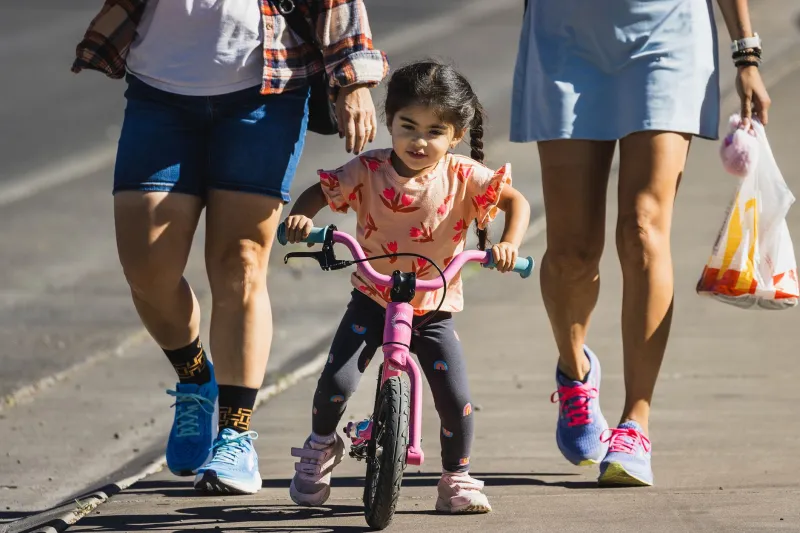
Ask a four-year-old what they learned at nursery today and you might get ‘we had crackers’ or ‘I was a dinosaur’. Ask them where we stop on the way to the park and you may get something far more useful: ‘At the kerb.’ That is not a coincidence. Road sense for under-fives is not a one-off lesson with a clipboard. It is a hundred tiny repetitions, tucked into the ordinary walk to the shop, the nursery gate, the bus stop or the puddle by the bins.
At Dryden Street Nursery, we treat the pavement as part of the classroom. Not in a formal, hi-vis-and-lanyard way every single minute, but in the way we walk, stop, chat and model. Children learn what we do far more reliably than what we announce. So the nursery run becomes a rolling lesson in waiting, looking, listening and holding on — without turning every kerb into a lecture.
The pavement is where the practice happens
You cannot teach road safety to a two-year-old by explaining traffic speed. You can teach them that we stop at the edge of the pavement, that we hold a hand or the buggy, and that we listen for the grown-up’s voice before we move. That is the real curriculum. It is short, repeatable and built into the day.
On our local walks, staff use the same small routines again and again. We pause before the kerb. We say what we can see. We wait for the noise of the road to settle. We hold hands or use the buggy handle, depending on the child and the street. And we narrate it simply: ‘We are stopping. The road is busy. We wait.’ It sounds almost too ordinary to matter. It matters enormously.
What staff actually do — nothing fancy
There is no secret trick. The adults model the behaviour they want to see. If we want children to stop at the kerb, we stop at the kerb. If we want them to listen, we stop talking for a second and actually listen. If we want them to hold hands without a wrestling match, we ask early — before the road, not at the edge of it.
We also keep the walk calm. A rushed walk with three adults saying three different things is not a road-safety lesson; it is a small anxiety workshop. So we agree on the route, the stopping points and the hand-holding plan before we set off. We use the buggy for children who need it, and we do not treat that as a failure. It is just the right tool for the day.
Three phrases that do the heavy lifting
You do not need a script. You need a few phrases that mean the same thing every time, so children can predict what happens next. These are the three we reach for most:
- Pavement feet. This means walking feet on the pavement, not racing feet. It is not a punishment and it is not a demand for perfect stillness. It is a reminder that the pavement is for walking, and the grown-up stays close.
- Kerb pause. This is the stop at the edge. It is a pause, not a chat. We say it, we do it, and we wait. The more often it happens, the more it becomes a habit — for the adult as well as the child.
- Hands on. This can mean hand in hand, hand on the buggy, or hand on the grown-up’s coat. It gives the child something clear to do with their body, which is often more useful than being told to ‘be careful’.
Use the same words at nursery and at home if you can. Consistency is not about being strict. It is about being predictable. A child who knows what ‘kerb pause’ means is a child who is less likely to be surprised by the edge of the road.
The five-minute Stop-Spot-Go game
This is a simple pavement game for the walk home. It takes about five minutes and works best when you are not in a hurry. It is not a test. It is a bit of fun with a serious point underneath.
- Stop. Choose three safe stopping points on your usual route — a driveway, a lamp post, the corner before the crossing. At each one, stop and say ‘Stop’. Let your child say it too. The aim is to practise stopping when you are not already at the kerb.
- Spot. Ask your child to spot something safe to help us cross: a zebra crossing, a lollipop person, a green figure at the pelican crossing, or a grown-up’s hand. Keep it concrete. ‘Can you spot the stripes?’ works better than ‘Is it safe?’
- Go. When you have stopped and spotted, you go — together, holding hands or the buggy. Give a clear ‘Ready, steady, walk’ or ‘Off we go’. The child learns that going follows stopping, not the other way round.
Do it once on the way home and once on the way out. That is it. No worksheets, no gold stars, no lecture. Just the same little pattern, repeated until it feels normal.
If your child is a runner, a dawdler or a buggy-hater
Some children bolt. Some children stop to inspect every leaf and drain cover. Some children treat the buggy as a personal insult. All of that is normal. The trick is to adjust the walk rather than abandon the practice.
For runners, use the buggy or a wrist link if you need to, and choose quieter streets for practice. For dawdlers, build in a ‘spotting’ job — ‘You be the kerb detective’ — so the walk has a purpose. For buggy-haters, let them walk the last stretch and hold the buggy handle. The goal is not a perfect walk. The goal is a child who knows what happens at the edge of the pavement.
Little steps, big days
Road safety for under-fives is not one big talk. It is the small, boring, repeated stuff: stopping, looking, listening, holding on. It is the walk to nursery, the trip to the shop, the five minutes after pick-up. And it works best when the grown-ups are doing it too.
So next time you are on the nursery run, try a kerb pause. Say the words. Wait. Then go. It is a little step, but it is one of the big ones.