The Falling-Out and the Making-Up: A Grown-Up’s Guide to Nursery Friendships
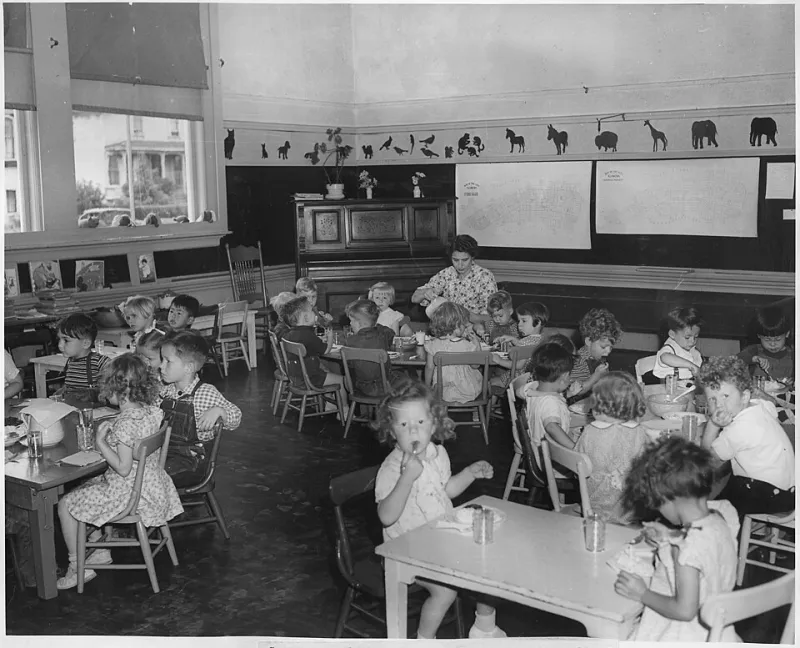
Photo: Unknown authorUnknown author or not provided, Public domain, via Wikimedia Commons
Pick-up time at nursery has a soundtrack all of its own. There’s the zip that won’t zip, the parent hunting for a lost glove, and the small person announcing at full volume that nobody was their friend today. Then, by the time everyone’s in the car, the same child is asking if that friend can come for tea. Early friendships are like that: loud, fast and full of feeling.
Here at Dryden Street, we see these little social experiments every day. They are not miniature adult relationships. They are practice – for sharing space, using words, recovering from a wobble and trying again. And they can be just as confusing for the grown-ups watching from the sidelines.
Why ‘You’re Not My Friend’ Is a Feeling, Not a Fact
At two, three and four, friendship is often about proximity and play. ‘Friend’ can mean ‘the person I was just doing puzzles with’ or ‘the person who has the good digger’. A fall-out might really be about a turn in the home corner, a game that changed without warning, or a morning that started wobbly. The words are big because the feeling is big. It does not mean a friendship is over. It means something felt unfair, scary or left out in that moment.
Take Maya, three. She tells her mum that Evie is not her friend anymore because Evie sat next to someone else at snack. By Thursday they are holding hands through the gate. Nothing dramatic happened in between. Maya found the words to say she felt left out, Evie said she still wanted to play, and the friendship carried on. That is the work of early years in a nutshell.
The Shifting Alliances of the Sand Pit
Nursery groups shift daily. One child is ‘best friend’ at 9am, ‘not my friend’ by 10.15, and back together after snack. It can look brutal to an adult, but it is often social experimentation. Children are learning how to enter play, hold a role, negotiate, and repair. Sometimes they use exclusion to test power or to protect a game that feels precious. Our job is not to insist that everyone plays together all the time. It is to help them find kinder, clearer ways to say what they need.
It helps to remember that sharing is a skill, not a test. A child who snatches the red car is not being mean for the sake of it. They are still learning that wanting something and getting it are two different things. Turn-taking language works better than forced generosity: ‘You can have it when I’m done’, ‘My turn, then your turn’, ‘I’m still using it.’ Those phrases take years to bed in, but they are worth repeating.
What to Say at Pick-Up
Keep it low stakes. Instead of ‘Who did you play with?’, try ‘What was the best bit?’ or ‘Was there a tricky bit?’ If your child says someone is not their friend, reflect it back rather than launching an investigation. ‘That sounds like a cross feeling. Tell me more.’ Avoid cross-examining them in the cloakroom while another parent pretends not to listen.
Some scripted phrases that can help:
- ‘It sounds like you felt left out when Evie sat somewhere else. That’s a yucky feeling.’
- ‘You can say “I didn’t like that” instead of “you’re not my friend”.’
- ‘Do you want space from Sam, or do you want help finding a way to play again?’
- ‘You don’t have to be friends with everyone. You do have to be kind.’
- ‘It’s okay to want a minute. You can say “I need some space”.’
If another parent is nearby, keep it light. ‘We’ll let them sort it with a bit of help’ is usually better than ‘Say sorry right now.’ Children pick up on adult tension faster than we think.
Repair Without the Forced Sorry
A forced apology is often a performance. The child learns to say the word, not to notice the impact. Instead, model and scaffold repair. ‘Look at Leo’s face. His tower fell down. What could we do?’ Offer choices: rebuild it together, fetch a new block, or say ‘I’m sorry I knocked it.’ If your child will not apologise, you can say it for them: ‘I’m sorry, Leo, that was frustrating. Let’s help you rebuild.’ The child learns from the modelling, even if they do not join in today.
This is not about letting behaviour slide. It is about teaching the skill behind the apology: noticing, caring and trying to put things right. That takes repetition, and it takes a calm adult nearby.
When to Step In (and When to Hover)
Step in for physical safety, repeated targeted exclusion, or if one child is very distressed and cannot use words. Otherwise, hover. Give it a minute. Narrate what you see: ‘You both want the same bike. Hmm.’ Sometimes your calm presence is enough. If you do need to intervene, keep it neutral: ‘I can see two children who both want a turn. Let’s make a plan.’ Avoid labelling one child as the bully and the other as the victim. Keep it about the moment, not the person.
At Dryden Street, we see these moments as practice, not problems. Children are learning that relationships can wobble and come back. Our job is to be steady, offer usable words, and not panic when a four-year-old declares a friendship over before lunch. If you are worried, talk to us. We will share what we see and work together. And if your child comes home saying they are not friends with anyone, take a breath. Ask what happened before and after. Often there is a reunion before the coats are even on.