Papery Skins, Muddy Fingers: The Long Wait a Bag of Bulbs Teaches
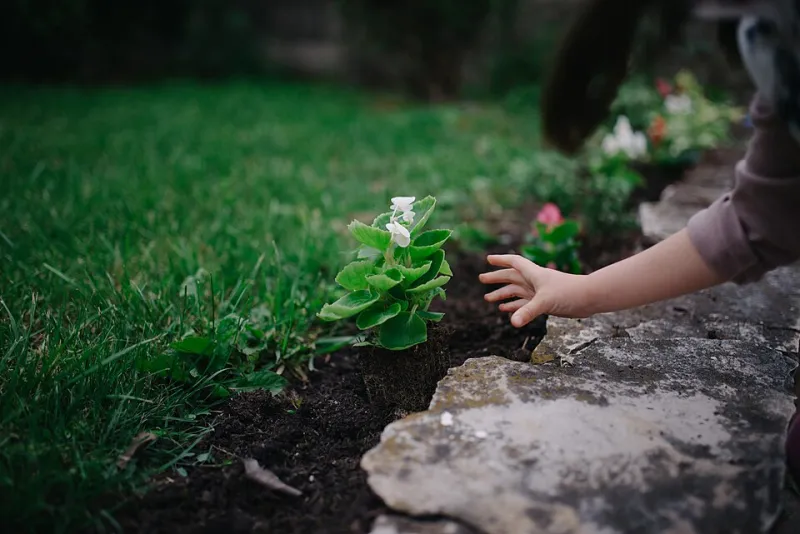
Photo: Shixart1985, CC BY 2.0, via Wikimedia Commons
The bag of daffodil bulbs arrives on a Tuesday, slightly dusty, rustling like a crisp packet. By ten o'clock it has been opened, counted four times and argued over by a small committee of three-year-olds, each of whom is certain they have found 'the biggest one'.
November is not the obvious month for gardening with under-fives. The beds are soggy, the light drains away by half three, and every instinct says wait until March. But the bulb morning has become one of our favourite rituals at Dryden Street Nursery, precisely because it asks children to do something genuinely awkward: put something in the ground, pat the soil down, and then walk away from it for four months.
A Trug, a Tray and a Job Worth Doing
We run it in small groups — four or five children at a time — around a low table with a big trug of peat-free compost, a stack of pots with proper drainage holes, spoons and small trowels, and a shallow bowl of bulbs. The bulbs are the star: firm, papery, faintly oniony, each one a different weight in the hand. Children pick one up, turn it over, compare it with a friend's, notice the little flat disc at the bottom where the roots will come from and the pointed tip where the shoot is already, quietly, thinking about it.
An adult sits at eye level and does very little talking at first. Then a few useful words: 'nestle it in', 'pointy end up', 'tuck it up to its neck'. We count bulbs into pots — three in this one, five in that — and children write their own labels, which is to say they make marks and tell us what the marks say, and we write the translation underneath.
One member of staff stays on hand-washing duty, because compost goes everywhere and bulbs are not food. We talk about that plainly and without drama: bulbs stay out of mouths, hands get washed with soap when we're finished, and anyone with sensitive skin can wear gloves. Daffodil bulbs in particular can irritate skin, and they are definitely not for dogs or cats, so the bag lives on a high shelf between sessions.
The Point Isn't Really the Flower
There's a temptation to measure a planting morning by how many pots end up neatly lined up on the fence. The real work is happening somewhere less photogenic.
Waiting is hard at three. It is hard at thirty-three, come to that. A bulb is a lovely, concrete way to practise it, because the reward is genuinely delayed and genuinely worth having. Children are not being asked to be patient about a biscuit; they are being asked to hold a small, ordinary object in their minds for weeks and weeks, and to trust that something is happening in the dark.
Around that one act, a lot of early learning quietly arranges itself:
- Fine motor control — gripping a smooth, heavy bulb, filling a pot spoon by spoon without burying the whole patio.
- Early maths — counting bulbs, comparing sizes, working out how deep is 'twice as deep as the bulb is tall'.
- Language — shoot, root, compost, dormant, sprout, 'pointy end'. Lovely, specific words that children don't hear every day.
- Understanding the world — cause and effect, seasons, the idea that cold and dark are not the same as dead.
- A little bit of responsibility — someone has to check the pots, and it might as well be them.
And there is something else: a first, gentle brush with disappointment. Some bulbs rot. Some pots get knocked over. Some squirrels have opinions. Learning that a failed pot is not a failed child is a useful lesson to meet early, with a grown-up nearby and a spare bulb in the bag.
Making the Waiting Visible
Four months is an impossible stretch for a child who still measures time in sleeps and 'after nursery'. So we give the wait a shape.
Each group takes a photo of their pot on planting day, and the photo goes on the wall next to a big sheet of paper. Every Friday, someone draws a line or sticks on a dot. It isn't a countdown to a date — it's a record of how much waiting has already happened, which is a much more encouraging thing to look at. We check the pots together, prod the compost with a finger, and say, out loud, 'Still waiting. That's the job.'
In January, when the first fat green noses push through, the noise in the garden is something else entirely. That is the moment the whole thing pays off: not the flower, the evidence. 'We did that. Ages ago. And look.'
A Windowsill Version at Home
You don't need a garden, an allotment or any particular skill. A supermarket bag of bulbs, a pot and a windowsill will do.
Pick bulbs that are firm and dry, with no soft patches or blue-green mould. Garden centres sell loose bulbs well into November, and the big sacks outside the entrance are usually the cheapest way in. Choose a pot with a hole in the bottom — a plastic one is fine and honestly easier — and fill it with peat-free compost to about two-thirds. Push the bulbs in, pointy end up, about twice their own depth apart, then top up and firm gently. Water once, properly, and then leave it alone somewhere cool and light.
A few reliable choices for a first attempt:
- Paperwhite narcissi — no cold needed, quick to start, gloriously scented. They do flop, so push a few twiggy sticks in for support.
- Prepared hyacinths — sold specifically for forcing indoors. These need around eight to ten weeks in a cool, dark place (a garage, a shed, a cold cupboard) until the shoots are a couple of centimetres tall, then they come inside to flower.
- Daffodils and muscari — happy outdoors in a pot by the door, and forgiving if you forget them for a week.
- Tulips — need a proper cold spell, so keep them outside rather than on a warm kitchen sill.
The main ways to go wrong are overwatering (soggy compost, no drainage, sad bulb) and putting pots right next to a radiator. Otherwise, less is more. A finger in the compost once a week tells you everything you need to know.
The Sensible Bits
A short list, because bulbs are lovely and also not snacks:
- Keep the bag of bulbs well out of reach until you're planting, and clear up any loose skins afterwards.
- Supervise closely, wash hands with soap afterwards, and use gloves if your child has eczema or sensitive skin.
- Daffodil bulbs are toxic to dogs and cats — a pot outside is safer than a low indoor shelf if you have a curious pet.
- Never let children eat compost, and give the table a wipe down afterwards.
What to Say Between Now and March
The single most useful thing you can do with a planted pot is talk about it. Not every day — that gets tedious — but often enough that it stays alive in your child's mind. 'I wonder what's happening in the dark down there.' 'Remember when we pushed them in?' 'Shall we have a look and see if anything's changed?'
Then, when the first green tip appears, make a fuss. Genuine, slightly over-the-top fuss. Because what your child has actually done is not gardening. It is trusting a process they cannot see, for longer than they can properly remember, and being right.
That's a decent thing to learn in November.