The One-Pocket Museum: Giving Your Child’s Nature Finds a Proper Home
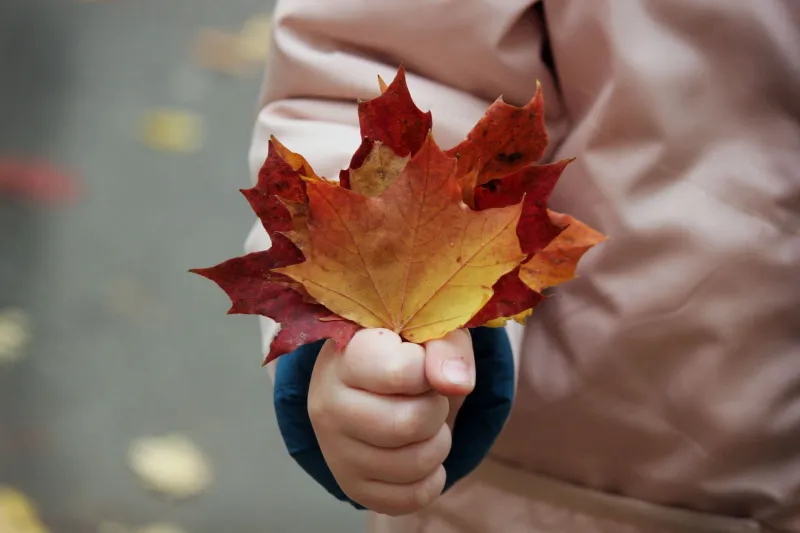
There is a particular rustle that follows a nursery walk home. It comes from a coat pocket stuffed with a bent stick, three acorns, a feather and something that might once have been a leaf. To a grown-up, it is a washing challenge. To a small child, it is a collection.
At Dryden Street Nursery, we see this every week: children arriving with fists full of treasure from the route to the park, the pavement outside the shop or the grassy corner by the bus stop. These finds are not random. They are evidence of a child noticing the world and deciding it matters. The trick for families is finding a way to respect that instinct without turning the front hall into a branch of the Natural History Museum.
Why a pocketful of nothing is actually something
A stick can be a wand, a spoon, a snake or a walking stick for a beetle. A stone can be smooth, speckled, heavy or cold. A leaf can be crunchy, damp, curled or bigger than a hand. When children collect, they are sorting, comparing, describing and making choices. They are also practising something quietly important: knowing what they like and keeping it safe.
That is early learning in its most ordinary clothes. It does not need a worksheet. It needs a bit of time, a bit of language and a grown-up who does not sigh too loudly when a conker rolls under the shoe rack.
The pocket treasure rule
A simple family rule can save a lot of soggy trouble. Call it the one-pocket museum, or the treasure rule, or whatever sticks with your child. The idea is this: on any walk, each child chooses one small keeper to bring home. Everything else can be looked at, talked about, photographed or returned to the outdoors.
One keeper is enough because it gives the find status. It is not a handful of debris; it is the chosen object. A single acorn can be carried carefully, shown to Grandma, placed on a windowsill and remembered. Ten acorns become a pile that nobody can quite love.
You can adapt the rule for the journey. Perhaps the keeper has to fit in a coat pocket. Perhaps it has to be something that is already on the ground, not pulled from a living plant. Perhaps it needs to be washed when you get home. Nursery children are very good at rules when the rules are clear, consistent and not too complicated.
A small display, not a forest
Honouring a find does not mean keeping everything forever. It means giving the chosen thing a place to be seen. A few ideas that work in real homes:
- The shoe-box museum. Line a small box with paper and let your child arrange one or two finds inside. Add a handwritten label: “Smooth stone, found near the gate.”
- The jam-jar shelf. A clean jar with a lid can hold a feather, a shell and a tiny pine cone. It looks intentional rather than accidental.
- The egg-carton cabinet. Perfect for sorting stones or seed cases. Your child can decide which compartment each treasure deserves.
- The photo book. Take a picture of the find where it was discovered, then let the object go back outside. The photo becomes the collection.
- The string gallery. Peg a few lightweight finds to a piece of string across a window. It is a display, not a permanent installation.
Rotate the collection. When the shelf is full, choose one thing to keep and say goodbye to the rest. A child who learns that collections can change is also learning that letting go is part of keeping.
Conversation starters for the walk home
The real value of a pocket treasure is the chat around it. Try a few of these, but do not turn them into a quiz:
- “What made you choose that one?”
- “What does it feel like? Smooth, bumpy, cold, scratchy?”
- “Where was it before you picked it up?”
- “Is it heavier or lighter than your hand?”
- “What could it be if it was pretending?”
- “Shall we put it back where we found it, or take it home to show someone?”
These are the kinds of questions that build vocabulary without feeling like a lesson. They also give a child the message that their noticing is worth talking about.
The soggy-leaf problem
Some finds are best left outside. Soggy leaves, unknown berries, broken glass and anything that might have been near a dog are not pocket material. A quick family check before the pocket closes keeps things safe: Is it clean enough? Is it safe to carry? Is it small enough? If not, it can still be admired, photographed or pointed out to a grown-up.
It is also worth having a “return pile” by the door. A basket or bucket for outdoor finds means the hallway is not the first stop for every muddy treasure. At the end of the week, the return pile can go back to the garden or the park.
A nursery-friendly habit
We are always glad to see children bringing a single interesting find to share at nursery. It gives them a chance to speak in front of a small group, to answer questions and to see that their home discoveries connect to nursery life. A stone from the walk to Dryden Street can sit on our nature table for a day, then go home again. The point is not to build a permanent archive. The point is to say: we noticed that you noticed.
So the next time a small person presents you with a soggy leaf and a look of great seriousness, try not to see the mess first. See the museum. One pocket, one keeper, one small story — and a hallway that stays just about walkable.