What to Keep When the Fridge Door Is Full: A Gentle System for Nursery Art
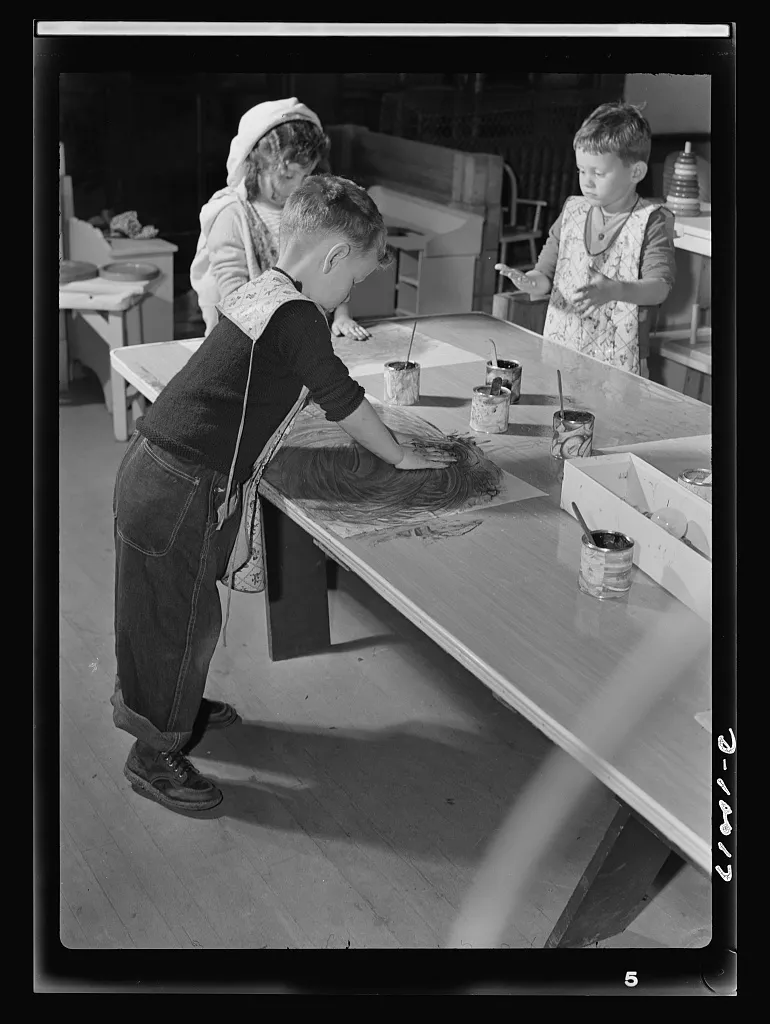
Photo: Ann Rosener, Public domain, via Wikimedia Commons
There is a particular kind of joy in the nursery pick-up handover: a small person thrusting a sheet of A3 paper at you with the pride of someone who has just painted the Sistine Chapel. And there is a particular kind of quiet panic when you realise this is the fourth masterpiece this week and the fridge door is already three layers deep.
At Dryden Street Nursery, we send home a lot of art. Glue-heavy collages, swooping paint marks, potato prints, and at least one blue dog that looked very much like a blue dog to everyone involved. The paper mountain is real. But so is the guilt about what to do with it.
This is not a guide to keeping every single piece. It is a guide to keeping the right ones, celebrating the rest, and doing it in a way that feels kind to your kitchen table and your child.
Start with the fridge-door rule
A fridge door is a surprisingly good editor. It holds maybe six or seven pieces at a push, and that is plenty for a rotating gallery.
Pick a spot — the fridge, a kitchen cupboard, a length of string with pegs, a clip frame in the hallway — and decide that this is the display space. Not the whole house. Not the under-stairs cupboard. Just this one place.
When a new piece comes home, it goes on display. Something else comes down. That is the whole system. No laminating, no scrapbooking, no late-night sorting sessions with a label maker. The display stays fresh, your child sees their work being valued, and the kitchen does not slowly disappear under a layer of sugar paper.
A five-minute Sunday sort, with your child
Once a week, or whenever the pile starts to lean, sit down with your child and the paper mountain. Keep it short. Five minutes is plenty. The aim is not a tidy archive; it is a shared moment of looking.
Instead of asking “which one shall we keep?”, which can feel like a test with a right answer, try open prompts:
- “Which one makes you feel proud when you look at it?”
- “Which one was the most fun to make?”
- “Is there one you want to show Grandma?”
- “Which one shall we put on the fridge next?”
You are not asking them to rank their entire artistic output. You are asking them to notice what they liked. If they want to keep all of them, that is allowed. If they want to keep the one with the smudge and recycle the rest, that is allowed too. The point is that they are part of the decision, not that they pass an exam in curation.
Photograph the rest without ceremony
Here is the practical bit that saves the most space: take a photo before anything goes in the bin or the box.
You do not need a special app or a scanner. A phone photo on the kitchen table is fine. Lay the piece flat, get some decent light, and take one shot. If it is a sculpture or a sticky-tape creation, photograph it from a couple of angles. Then add it to a folder on your phone called something like “Nursery Art 2026” or simply “Small Masterpieces”.
A digital folder is not a replacement for the real thing. It is a memory saver. It means you can let go of the fifteenth painting of a sun without feeling like you are throwing away a piece of your child’s childhood. You are not. You are keeping the record and making room for the next one.
If you want to be extra organised, once a month you can back the folder up to a cloud drive or a family photo account. But honestly, a phone folder is a perfectly good start.
Store a small archive, not a warehouse
Even with photographs, there will be pieces you want to keep in real life. That is lovely. Just give them a boundary.
A single A3 wallet or a shallow plastic box under the bed is enough. Into it goes the piece that made you catch your breath, the first recognisable drawing of a person, the one with the note on the back from a key person, the one your child specifically asked you to save.
A good rule of thumb: if you would be happy to find it again in ten years, keep it. If you are keeping it because you feel guilty, photograph it and let it go. The box is for the keepers. The recycling bin is for the rest, and that is not a betrayal. It is how you make space for the next blue dog.
Display like a gallery, rotate like a wardrobe
Children notice when their work is displayed. They also notice when it never changes. A rotating display keeps the interest alive and stops the fridge door becoming a fire hazard.
Try a simple string line across a kitchen wall with wooden pegs. Or a few magnetic frames that you can swap out. Or a clipboard on a hook. The display does not need to be Pinterest-perfect. It needs to be visible and easy to change.
When you take a piece down, you can move it to the keep box or the photo folder. Your child sees the cycle: make, show, enjoy, make room. That is a healthy relationship with stuff, and it starts early.
Let the process have the last word
The thing about nursery art is that it is rarely about the product. It is about the squish of paint, the decision to use the blue crayon on the dog’s ear, the concentration of peeling a sticker, the pride of carrying it to the car.
So when the paper mountain grows, try not to see it as a test of your parenting or your storage skills. See it as evidence of a busy, curious, paint-covered childhood. Keep a few. Photograph the rest. Let your child choose. And remember that the bin is not the enemy of the memory — the memory is already in the making.
If you ever want ideas for displaying work at home, or you are not sure what to do with a particularly large cardboard creation, just ask a member of the team. We have seen it all, and we are always happy to help you make space for the next masterpiece.